If you operate in building in New South Wales, the white card is your ticket onto site. It sits in the exact same psychological container as your PPE and your profession licence: you are not functioning without it.
Where individuals obtain caught is with the expiry policies. They draw an old card from the bottom of the glovebox, or they have a green card from the 2000s, and they are not sure whether it is still acceptable under existing legislation.
I train workers on CPCWHS1001 Prepare to function securely in the construction sector, and I still see a lot of confusion, even amongst experienced managers and job supervisors. The regulations have developed, the unit codes have altered, and each state handles the details a little in a different way.

This overview focuses on NSW white card white card training expiration policies, using functional instances and side cases. It also touches on interstate and older cards so you can make audio decisions on your own, your group, or your business.
What the NSW white card in fact is
The NSW white card is a "basic construction induction card," called for under the Job Health and Safety Regulation 2017 for anyone doing construction work. It shows you have actually finished nationally recognised general building induction training, currently based upon the system:
CPCWHS1001 - Prepare to function safely in the building and construction industry
Older cards may reference CPCCOHS1001A or CPCCWHS1001. Those are previous versions of the exact same underlying proficiency. The card itself is issued by SafeWork NSW, normally after you total training with an accepted Registered Training Organisation (RTO).
The card is not just for labourers. In NSW, you require a building and construction white card if you:
- physically execute construction work (labourer, carpenter, electrical expert, plumbing, painter, dogman, rigger, plant operator, pupil, and so on) regularly get in functional building zones as component of your task (site engineer, surveyor, developing examiner, job manager, supervisor, OHS advisor) manage or directly look after construction tasks, also if you are not holding tools
That is why you see such a vast array of people on site with a card: from a first year construction instruction through to senior site supervisors. Also some shipment motorists and realty representatives that regularly gain access to energetic websites select to hold a white card so they can satisfy building and construction emergency procedures and website entry requirements.
Does a NSW white card have an expiration day published on it?
No. Current NSW white cards do not display an expiration date. Lots of people think "no day" means "valid forever." That is just half the story.
SafeWork NSW treats a white card as existing so long as:
It was released by a legitimate, authorized body; and You have not had a break of 2 or more successive years from doing construction work.There is no automated expiry on a specific schedule date, unlike a chauffeur licence. Rather, the validity is connected to your recurring participation in building and construction work.
So if you completed your NSW white card course 10 years ago yet have actually continuously operated in construction, your card is still valid under current policies. I regularly fulfill woodworkers, plant drivers and job managers whose cards pre-date 2012 and are still approved on significant sites because they have actually continued to be energetic in the industry.
The 2‑year "inactivity" guideline in NSW
This is the essential guideline that catches individuals out.
Under the NSW strategy, your white card ends up being void if you quit doing building benefit 2 years or even more. The logic is uncomplicated: if you have actually run out the ready a while, your safety understanding around plant tools safety and security, harmful compounds, silica dirt and asbestos building and construction sites might run out date.
SafeWork NSW guidance is clear on this factor. If you have actually not accomplished construction work in the last 2 years, you are expected to finish the general building induction training again prior to you re‑enter building work.
Two points issue in practice.

First, "building job" is specified commonly. It covers new builds, renovations, upkeep, demolition, civil works, some mining-related tasks, and numerous film established building tasks. You do not require to be on the tools full‑time. If you are regularly on building and construction websites, working with professions, conducting studies, or handling job, that normally counts.
Second, the duty is shared. Employees have to ensure they hold a present construction induction card, but so need to companies and principal contractors. If you run group white card training for brand-new hires, or you are onboarding interstate employees onto a NSW project, you require to verify they have not had a lengthy break from construction.
A valuable general rule I utilize with customers: if you honestly can not remember the last time you got on an authentic building and construction site, and it seems like several years, presume you need to redo CPCWHS1001.
Do old cards still count? Permit, blue cards, and very early white cards
NSW utilized to release green "WorkCover" cards for construction induction. Various other states made use of various colours: Western Australia and Queensland blue cards, various state‑branded cards prior to the nationwide "white card" system bedded in.
Under current arrangements, older cards can still be valid in NSW if three problems are met.
First, the card should have been released under the then‑approved basic building induction structure. That generally implies a WorkCover NSW green card, a genuine interstate building and construction induction card, or a very early "white card" referencing an older device like CPCCOHS1001A.
Second, the card must not be terminated, put on hold, or certainly fraudulent. If the card is harmed, unreadable, or the image is plainly not you, lots of principal professionals will reject it although the regulations concentrates on the training, not the plastic.
Third, the 2‑year inactivity policy still uses. A woodworker's white card or old green card from 2008 can still be accepted if that individual has been continuously functioning as a chippy. The same card in the hands of somebody that left building and construction in 2012 and is currently returning would not satisfy the existing NSW white card expiration rule.
On huge websites, I typically see three responses towards old cards:
Major tier‑one contractors typically have their own internal WHS plans that are tighter than the lawful minimum. They might insist on an extra recent card or, at least, durable proof that the employee has actually stayed active in building. Smaller specialists are generally more loosened up, concentrating generally on whether the card looks legit and the worker appears qualified. Government and high‑risk tasks (for instance, involving asbestos building and construction sites, tunnelling, or facility plant) often tend to mirror the stricter end of the spectrum.So legitimately, numerous old cards still count. Almost, you may discover project‑specific guidelines that nudge you towards a fresh white card course, specifically if your card predates the existing CPCWHS1001 requirements.
What if my card is from another state?
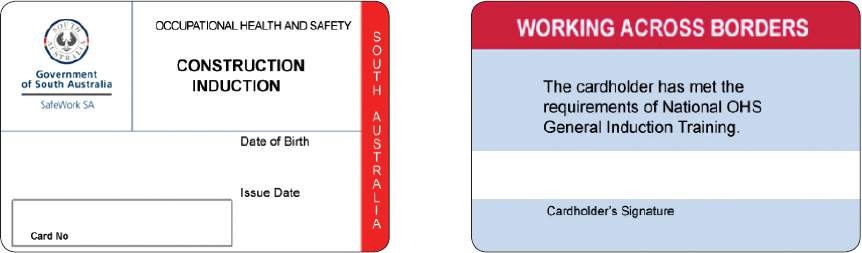
The white card is a nationwide certification. A legitimate card from South Australia, Victoria, Queensland, Western Australia, Tasmania, the ACT or the North Region is normally recognised in NSW, supplied the training fulfilled the nationwide competency.
A couple of instances from technique:
- A South Australian white card (typically issued after training with a carrier in Adelaide, Morphett Vale or Salisbury) is generally approved on NSW sites if the worker has continued to be in building. A NT white card obtained using a legitimate NT training provider in Darwin, under CPCWHS1001, is identified in NSW. Nonetheless, the NT also has its own 60‑day policy around providing physical cards after training, so workers moving interstate need to manage that timing. A Queensland or WA white card that was done totally on the internet years ago can increase eyebrows in NSW. Several of those older training courses were criticised for top quality issues. If the RTO that provided the card has considering that been approved or had its approval withdrawn, the card might be rejected.
In my experience, the main rubbing factors with interstate cards in NSW are:
- uncertainty about whether the training was face‑to‑face or online concerns regarding "tick‑and‑flick" RTOs that supplied really brief courses without proper assessment lack of records, specifically when attempting to verify a card provided more than a decade ago
If you are preparing to bring a crew from interstate into NSW for building and construction jobs that need a white card, it deserves doing an internal white card check prior to mobilisation. Validate their cards are real, note which RTO released them, and think about whether a brief refresher https://arthurvwly840.tearosediner.net/white-card-course-perth-comprehending-protection-regulations-and-also-regulations session on NSW‑specific WHS expectations would aid, also if it is not legitimately required.
Does a white card refresher course exist in NSW?
There is no authorities, mandated white card refresher course in NSW at established periods. Once you hold the card and stay energetic in construction, you do not need to restore it every five years, the method some plant or high‑risk job permits operate.
However, numerous business select to treat their labor force as if a refresher course was called for. They might:
- send people back with CPCWHS1001 every 5 to one decade; or provide inner safety and security refreshers that mirror a lot of the white card course material (for instance, updated dirt control for silica, modern hands-on handling techniques, new emergency situation procedures, or changes to building and construction site signs obligations)
This is specifically typical in fields that remain on the boundary of building work, like some mining procedures, film set building and construction, and big maintenance shutdowns. Those settings progress quickly, and website drivers want self-confidence that everybody's fundamental WHS expertise is lined up with existing risks.
When your white card may be invalid in NSW
Here is where expiration materializes. Under NSW rules and normal website method, your white card is likely to be dealt with as void if any one of the following apply.
- You have not carried out building and construction help 2 or more years. For example, you did your Australian white card in 2015, functioned as a labourer for 2 years, then left for a transportation job and never ever tipped onto a building website once more. If you currently want to return under the building construction honor 2020, you would be anticipated to redo the induction. The card was issued by a non‑approved or discredited RTO. Throughout the "online white card" boom, some RTOs cut corners. If SafeWork or another regulatory authority has withdrawn recognition from that RTO, cards they issued can fall into a grey location or be denied outright. The information on the card no longer match you. If the name is various to your current lawful name and you can not verify the link, or the picture is clearly not you, site protection may reject access. Rectification generally includes calling the providing regulatory authority (for NSW, SafeWork) instead of doing a new program. The card is damaged, unreadable, or undoubtedly changed. Few site managers desire the risk of accepting a card that has actually been laminated over, cut down, or covered. From their point of view, it is safer to insist on a replacement card or new training. You have been outlawed or restricted. In very unusual cases where severe WHS violations take place, regulators can suspend or terminate authorisations. This is a lot more common with high‑risk work licences than white cards, yet it exists in the background.
Those are functional "expiration" problems, even though the plastic itself has no printed date.
Can I still do a white card course online?
People search "can I do white card online" regularly, and the solution depends greatly on where you are.
NSW has watched out for totally self‑paced online white card training courses. The state has regularly pushed for either face‑to‑face or real‑time online distribution, with real-time trainers and genuine analysis. This pertained to the front when online training courses in some other states were so lax that individuals finished their "training" in under 30 minutes.
Under present NSW settings, if you are obtaining a NSW white card:
- the training have to be delivered by a SafeWork NSW approved RTO you can generally select either in‑person classroom distribution or attached real‑time online shipment (for example, Zoom) where your identity and participation can be confirmed fully self‑paced "visit whenever, click via some slides, tick a few boxes and download your card" choices are not accepted for a NSW‑issued card
If you live near the border or travel for job, it can be tempting to do a quick online program advertised out of Queensland or WA. Before you turn over your credit card, check whether that program fulfills your future job demands in NSW. If it does not, you might end up paying twice.
How long is the white card course, and is it hard?
For lots of people in NSW, the CPCWHS1001 training course is arranged as a complete one‑day session. Genuinely, expect 6 to 8 hours consisting of breaks and analysis. Some RTOs stretch it slightly if they are dealing with large group white card training courses or people with minimal English, literacy or numeracy.
The program is not academically challenging, but excellent trainers take it seriously. You will cover:
- legal responsibilities under the WHS Act and Policy common building and construction risks: falls, electric safety and security building risks, mobile plant, dangerous compounds, dust on building and construction sites, sound building and construction site issues, warm stress and anxiety construction controls, hands-on handling building risks, and even more basic risk administration and secure job method statements (SWMS) PPE building and construction website requirements, building and construction emergency situation treatments and basic building website signs
If you do a method white card examination or review typical white card concerns and solutions in advance, you will have a sense of what to expect. The focus gets on understanding and using security principles, not memorizing unknown regulations.
People new to building and construction typically worry about the assessment. My experience: if you pay attention, ask inquiries, and consider real site circumstances, you pass. Those who have a hard time are normally sidetracked, late, or dealing with the entire thing like a tick‑and‑flick exercise.
How to apply for a NSW white card or redo an expired one
Whether you are beginning in building and construction, returning after a long break, or attempting to satisfy building apprenticeship demands, the basic process in NSW is straightforward.
- Create a USI (Distinct Trainee Identifier). Most likely to the main USI web site and set up your ID. Without a USI, no RTO can provide your statement of achievement for CPCWHS1001. Choose an authorized RTO. If you browse "white card course Sydney," "white card Campbelltown," "white card Parramatta," or similar, you will discover lots of options. Check that the supplier is really authorized by SafeWork NSW to supply basic construction induction training. Enrol and finish the course. Bring the needed ID, arrive in a timely manner, and engage with the content. Whether you do white card face to face or in a real‑time digital format, you must complete all assessment jobs. Receive your declaration of achievement. After successful conclusion, the RTO will provide a statement of attainment for CPCWHS1001 - Prepare to work securely in the building sector. This file is very important; keep a digital duplicate. Wait for the card to be provided. In NSW, the RTO submits your details to SafeWork, which then publishes and mails your new south wales white card to your nominated address. Distribution times differ, however many individuals report obtaining their card within 2 to 4 weeks.
During that waiting duration, some sites will certainly approve your statement of accomplishment as proof that you have actually finished basic construction induction training. Others demand the physical card. If you are lining up job, talk with the site or work hire company concerning what they will accept.
The cost varies. Normal NSW prices sits somewhere in between $120 and $180 for a common white card course, though group white card training for employers can be more affordable per head. If you see costs that look too excellent to be real, ask more concerns regarding shipment mode, instructor experience, and whether the RTO is in fact approved.
Replacement cards, lost cards and name changes
Losing your card does not suggest your training goes away. Your hidden expertise sits in the training system as a statement of accomplishment for CPCWHS1001 or its earlier equivalents.
If you lose your NSW card:
- contact the RTO that delivered your training. They can typically reissue a copy of your declaration of attainment, and might help direct you on the next step if the RTO has actually closed, SafeWork NSW can help in validating your record or recommending on whether a new program is required you can ask for a replacement white card with SafeWork NSW if your initial card was provided in NSW and is still valid
If you can not remember who educated you, inspect your e-mail archives, old payslips, HR documents from a previous employer, or perhaps call major training companies in the location where you did the training course originally. Several workers are amazed to find their document still resting securely in a database from a program completed 10 or fifteen years earlier.
When your name changes, for example after marriage, do not wait until a rigorous site gatehouse rejects you entrance. Connect with SafeWork NSW and follow their procedure to update your card, offering identification files that link the old name to the new.
White card vs site induction
People often perplex the white card with a website induction. They relate however different.
The white card is general induction. It covers wide WHS principles that apply throughout construction websites in Australia: roles and obligations, usual hazards, threat administration, PPE, emergency response.
A site induction is specific to a specific job or office. It manages that site's layout, accessibility rules, fire escape, construction emergency situation treatments, plant motions, high‑risk locations, asbestos signs up, and any unique controls that surpass basic legislation.
You demand both. No quantity of site‑specific induction can alternative to the national general building and construction induction demand. Likewise, a white card alone is not enough to stroll directly right into a high‑risk area on a refinery closure or a major rail task. Both items of the problem job together.
How expiration regulations influence various roles
The NSW white card expiry setups catch different roles in different ways.
For profession workers, like electrical contractors and plumbers, the primary danger is allowing a lengthy non‑construction work break their connection. An electrician that moves into a pure office approximating duty for numerous years, after that goes back to on‑site installation under a construction agreement, may locate their card treated as ended also if they maintained their electric permit current.
For specialist roles, such as designers, land surveyors and project supervisors, the concern is whether they truly continued to "perform construction work." A civil engineer who has actually remained in style only, never ever tipping onto an online website, might be extra subjected than a coworker who consistently performed website assessments. In those grey areas, I have a tendency to encourage individuals to renovate the white card course. It gets rid of uncertainty and revitalizes their security mindset.
For those on the fringes, like shipment drivers accessing loading bays on building tasks or realty representatives revealing partially finished apartment or condos, expiry can really feel murky. The safest method is to think in functional terms: if you are subjected to construction hazards, treat on your own as "in building" and preserve your card. If you have been sitting behind a workdesk for years, accept that the card has actually effectively ended and re‑train prior to going back onto site.
Final ideas: old cards under new expectations
NSW white card expiry guidelines are straightforward on paper: no published expiry, but void after 2 years far from construction. In method, enforcement is shaped by site policies, the high quality of your initial training, and just how quickly you can demonstrate your recurring participation in construction work.
If you are holding an old card from NSW, SA, the NT, Queensland or elsewhere, ask on your own 3 useful concerns:
- Have I genuinely been active in building and construction in the last two years? Was my training provided by a trusted, approved supplier under the CPCWHS1001 household of systems or its identified predecessors? Would I be comfortable explaining my card history and current building experience to a rigorous safety supervisor at eviction of a significant project?
If the honest answer to any of these is "no," it is time to make an application for white card training once more. A single day of strong, present basic building and construction induction training is a small investment compared with the threats of relying upon an uncertain or successfully expired card.